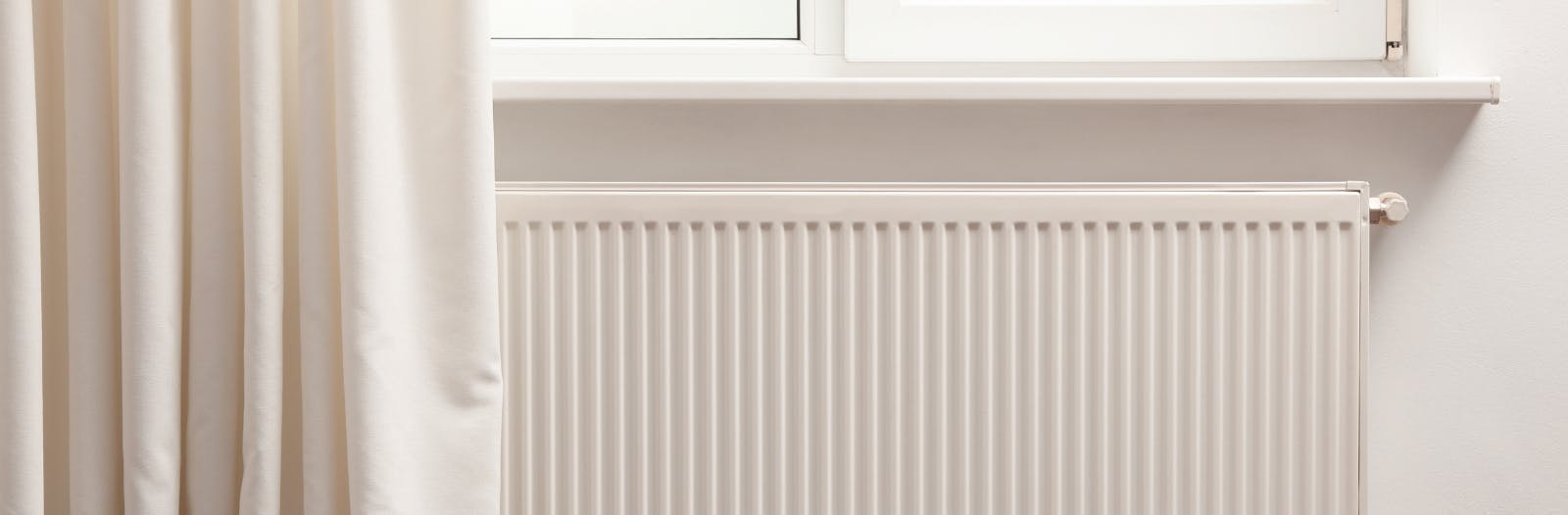
Regular boiler maintenance does not need to be complicated, but a few simple checks can make a big difference to safety, comfort and running costs in your Northampton home. Terraces, semis and newer estates all have their quirks, so it helps to know what to look for and when to call in an expert.
Safe basics before you start any boiler checks
Before you touch anything, make sure you know where your boiler manual is and where your stopcock and boiler isolation switch are. If you ever smell gas, see scorch marks or feel unsure, stop immediately and contact a Gas Safe registered engineer.
Most homeowner checks are visual or involve pressing buttons on the controls rather than opening the boiler. Anything involving taking the case off, adjusting gas components or wiring must be left to a qualified professional.
Monthly quick checks for your boiler and radiators
A short check once a month can highlight problems before they turn into a breakdown, especially in older Northampton terraces and semis with tired radiators and pipework. Try to do these checks around the same time each month.
Look at the pressure gauge with the heating off and system cool
Walk around and feel for cold spots on radiators
Listen for new noises from the boiler or pipework
Make sure the flue terminal outside is clear and secure
The pressure on most combi and system boilers should sit around 1 to 1.5 bar when cold. Check your manual for the exact range. If it is dropping regularly below 1 bar, or rising above 2.5 bar, that suggests an issue that needs a heating engineer.
In many older Northampton homes, particularly 1930s semis and Victorian terraces, radiators often develop cold patches, especially at the top or in the middle. Feeling each radiator helps you spot air in the system or sludge build-up early, so you can arrange bleeding or a professional clean before it affects every room.
New noises such as kettling (a whistling or bubbling sound), loud banging, or constant gurgling are not normal. A gentle hum and occasional noise as pipes warm are expected, but anything harsh, metallic or sudden should be checked by an engineer.
Seasonal checks to suit Northampton’s climate
Your boiler works hardest when the temperature drops, so it pays to give it a little attention during the warmer months too. This is especially true in newer estate homes where boilers are often in garages, lofts or utility rooms that can get cold in winter.
In late spring or summer, briefly turn the heating on for 10 to 15 minutes once a month. This keeps pumps and valves moving and helps prevent them seizing up before autumn. While it is running, listen for odd noises and walk around to check that radiators warm evenly.
The condensate pipe, usually a white plastic pipe running from your boiler to a drain, is another area to check. In Northampton’s colder spells, exposed pipes on outside walls or in uninsulated garages can freeze, which can shut your boiler down with a fault code.
Check that the condensate pipe is properly insulated where it runs outside or through cold spaces. If it is uninsulated, very small, or runs a long way outside, mention this to your heating engineer at your next service and ask about improvements.
Water quality, hard water and limescale
Northampton is known for fairly hard water, which means there is more calcium and magnesium in the supply. Over time, this can form limescale inside your boiler’s heat exchanger, hot water pipes and radiators, affecting efficiency and lifespan.
Signs of limescale issues and poor system water quality include noisy boilers, slow-to-heat radiators, frequent pressure issues and cloudy tap water when you first run the hot tap. While you cannot see inside the system, you can take steps to protect it.
Regular professional servicing is the main thing a homeowner can arrange to control limescale and sludge. During a service, the engineer can check system water quality, clean strainers and advise on treatment options suited to your property.
Ask a Gas Safe engineer about having inhibitor fluid in the system, which helps reduce corrosion and sludge, and whether a magnetic filter would benefit your setup. These are particularly useful in older Northampton houses with original radiators that are starting to clog and develop cold spots.
Controls and efficiency basics at home
Even with a healthy boiler, poor control settings can waste energy and leave rooms too hot or too cold. A few simple adjustments can improve comfort and reduce bills without complex technology.
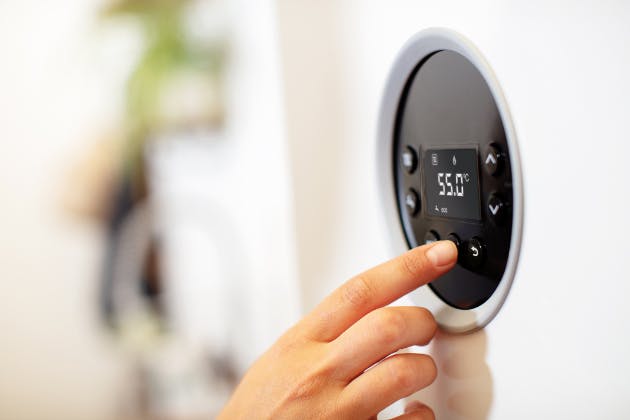
Make sure you know how to use your main thermostat and programmer or smart controls. Set programmes that match your routine, rather than leaving the heating on constantly, and avoid turning the thermostat up very high in the hope it heats faster. It simply tells the boiler to aim for a higher temperature.
Thermostatic radiator valves (TRVs) on individual radiators are useful for tailoring temperatures room by room. Keep them higher in living spaces and lower in little-used rooms, but do not turn them off completely in very cold weather, as that can increase the risk of pipes freezing.
If radiators are cold at the top and hot at the bottom, bleeding them can often help. Use a radiator key and a cloth, follow the instructions in your manual, and always check and top up boiler pressure afterwards if required. If you need to bleed radiators repeatedly, that suggests an underlying issue that needs an engineer.
When to stop and call a heating engineer
Some issues are not suitable for DIY checks and should be handled straight away by a professional. Acting early usually keeps repair costs down and reduces the chance of a complete breakdown on a cold Northampton evening.
Any leak from the boiler, nearby pipes or radiators
Repeated pressure loss even after topping up correctly
Persistent or changing fault codes on the display
Loud banging, clanging or kettling noises
Problems with pilot lights or ignition, including frequent cut-outs
If you notice scorch marks, sooty deposits, melted plastic, a yellow or unstable boiler flame, or any smell of gas, turn the boiler off and seek help immediately. For gas smells you should call the National Gas Emergency number and then arrange a Gas Safe engineer.
Never remove the boiler casing or attempt to work on gas components yourself. Your role as a homeowner is to monitor, keep an eye on performance and comfort, and arrange professional servicing and repairs when needed.
Next steps for Northampton homeowners
A simple monthly and seasonal boiler maintenance routine can keep your Northampton home comfortable, help prevent surprise breakdowns and support better efficiency. From checking pressure and radiator temperatures to watching for changes in noise, these small habits give you early warning of issues.
If any of your checks raise concerns, or if it is been 12 months or more since your last professional inspection, it is time to book a boiler service or repair. Contact Able Plumbing Services on 07756709591 to arrange a convenient visit and keep your heating in top condition. For more information, visit the boiler servicing and boiler repairs pages.