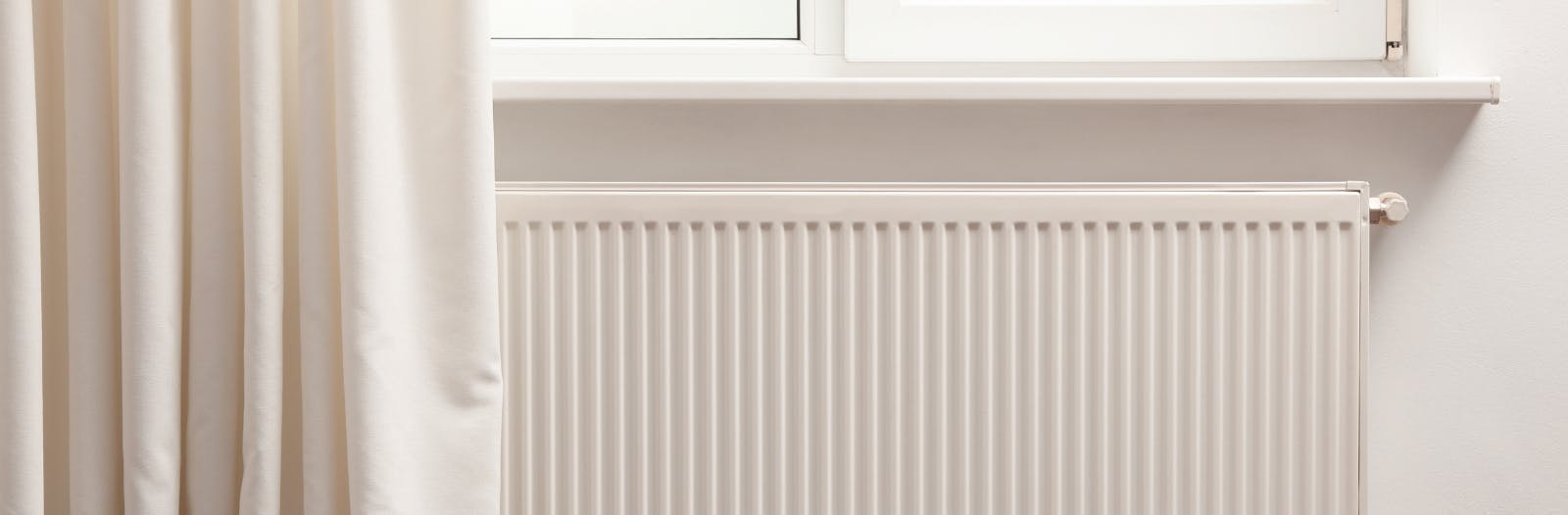
If your radiator is hot at the top but cold at the bottom, you are not alone. It is a very common heating issue, and with a bit of careful troubleshooting you can usually work out whether it is a simple fix or a job for a heating engineer.
What a cold radiator bottom usually tells you
When the top of a radiator heats up but the bottom stays cold, it usually means hot water is not circulating properly through the full panel. Instead, something is blocking or slowing the flow at the bottom.
The most common culprits are sludge build-up inside the radiator, poor circulation in the system, or issues with the valves controlling the flow. Less often, trapped air can be involved, but this usually affects the top rather than the bottom.
Quick safety checks before you start
Before touching any part of your heating system, always think about safety. Radiators, pipework and water inside the system can be extremely hot.
Turn the heating off at the boiler or programmer and allow everything to cool for at least 30 minutes. If you need to touch pipework or bleed valves, use a cloth or glove and avoid placing bare skin on hot metal.
Never remove radiator valves or pipe fittings yourself
Keep children and pets away while you are checking radiators
Stop immediately if you see leaks or feel uncertain, and call an engineer
Step 1: Check the boiler pressure
Low system pressure can affect circulation and leave some radiators partially cold. On most combi and system boilers, there is a pressure gauge on the front.
With the heating off and the system cool, the needle typically should be around 1 to 1.5 bar. If it is much lower, check your boiler manual for instructions on topping up the pressure, or contact a heating engineer to do this safely.
Step 2: Check if it is air or sludge
Trapped air normally causes the top of a radiator to be cold while the bottom is warm. In your case, the opposite is happening, which usually points to sludge or poor circulation rather than air.
Only bleed a radiator if the top is cold or patchy and the bottom is hot. Bleeding when the top is already hot will not fix a cold bottom and can lower system pressure unnecessarily.
How to bleed safely (if the top is cold)
If any radiator has a cold top, turn the heating off and allow it to cool. Use a radiator key on the bleed valve at the top corner, turning slowly anti-clockwise until you hear air hissing out.
Once water starts to flow steadily, close the valve gently. Then recheck boiler pressure and top up if needed following the manufacturer instructions. If water is very dark or black when you bleed, this is a sign of sludge in the system.
Step 3: Feel the flow and return pipes
When the system is cool again, turn the heating back on and let it run for 10 to 15 minutes. Carefully feel the pipes going into and out of the affected radiator, starting gently in case they are very hot.
The pipe with the thermostatic radiator valve (TRV) is usually the flow. It should get hot first, then the return pipe should follow. If one pipe stays much cooler, there could be a valve or circulation issue that needs professional attention.
Step 4: Check TRVs and lockshield valve settings
A stuck or incorrectly set valve can restrict water flow and leave the radiator cold at the bottom. The TRV is the numbered control on one end of the radiator, and the lockshield is the plain valve on the opposite side, often with a cap.
Checking the TRV
Turn the TRV fully open to its highest setting. If nothing changes after the system has been running, you can gently remove the plastic head (not the metal body) following the manufacturer instructions.
Underneath you will see a small metal pin. It should move up and down slightly when pressed gently. If it is stuck down, lightly tapping the side of the valve body can sometimes free it, but if it will not move, an engineer should replace the valve.
Checking the lockshield
The lockshield controls how much water flows through the radiator and helps balance the system. If it has been knocked or turned, the radiator may not be getting enough flow.
With the heating off and the radiator cool, you can remove the plastic cap and gently turn the valve a quarter turn open using an adjustable spanner. Avoid fully opening or closing it, as correct balancing is a job for a heating engineer.
Recognising sludge and poor circulation
If only one radiator is affected and the valves seem to work, there might be a build-up of sludge or magnetite sitting at the bottom. This is a mix of rust and debris that settles out of the system water.
Typical signs that a more thorough clean or power flush may be needed include:
Several radiators are cold at the bottom or heat up unevenly
Radiator water is very dark, gritty or black when bled
The boiler or pump makes gurgling or grinding noises
The system takes much longer than usual to warm the house
A professional system clean or power flush can remove sludge and restore flow. This is not a DIY task, as it involves specialist pumps, chemicals and careful protection of your boiler and pipework.
Hard water, scale and your radiator efficiency
In harder water areas, limescale can build up inside boilers and pipework over time. This reduces efficiency and can make circulation issues and sludge problems worse.
Scale and sludge together act like an insulating blanket, so radiators take longer to warm up and may stay colder at the bottom. Regular servicing and, where appropriate, fitting a magnetic filter and scale reducer can help protect your system and keep radiators working properly.
When to call a heating engineer
It is sensible to book an engineer if you notice repeated pressure loss, leaks at valves or pipe joints, loud banging or grinding from the boiler or pump, or several radiators with the same cold-bottom issue. These are signs of underlying problems that go beyond simple DIY checks.
If you are unsure at any stage, or do not feel confident working near hot water and valves, it is always safer to stop and ask a professional to investigate. A proper diagnostic visit can often prevent small circulation issues turning into breakdowns.
Get your radiators checked by a local expert
If your radiators are hot at the top and cold at the bottom, and the simple checks above have not solved it, it is time to bring in a qualified engineer. For friendly, professional help, including system diagnostics and boiler repairs, you can contact Able Plumbing Services.
Whether you are in Northamptonshire or the surrounding areas, Able Plumbing Services can inspect your system, explain what is going on in clear terms and recommend the most effective fix. To book a diagnostic visit, call 07756709591 and get your heating running efficiently again.