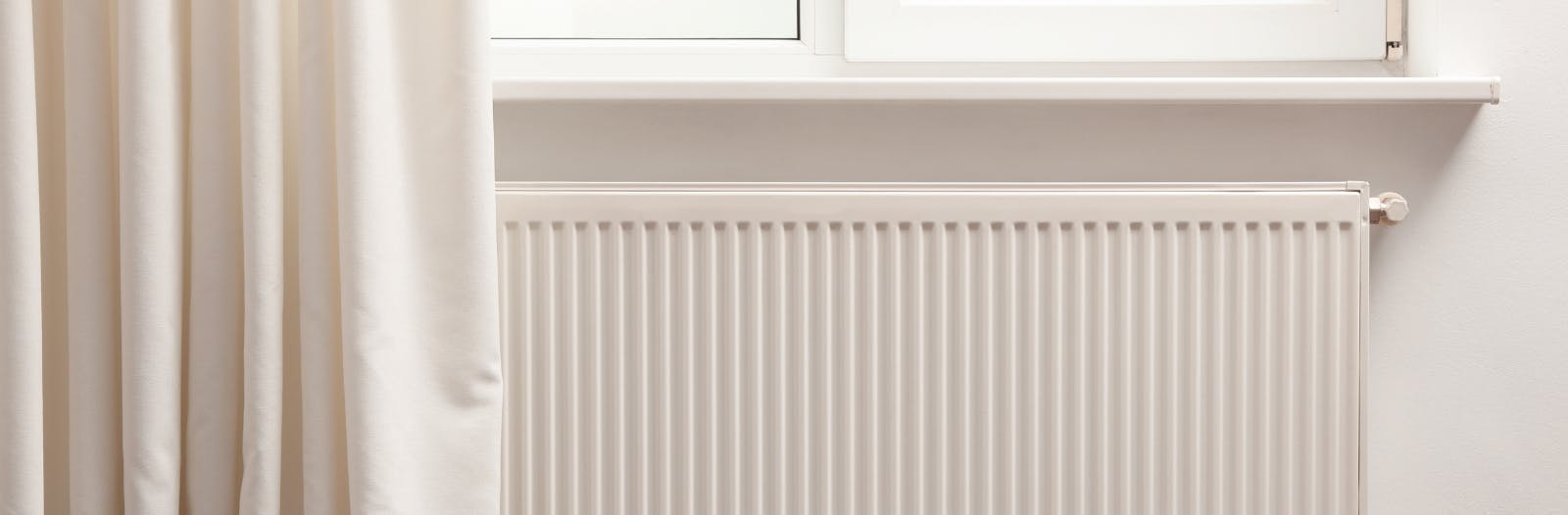
If some rooms in your home are boiling while others stay chilly, your radiators probably need balancing. Getting this right can make your heating more comfortable, more efficient and kinder to your energy bills.
What radiator balancing actually does
Balancing is all about how hot water from your boiler is shared between each radiator. Without it, the closest radiators can grab most of the flow, leaving those further away struggling to heat up properly.
To balance your radiators, you adjust the lockshield valves (the usually capped valve on one end of each radiator). These control how much water flows through each radiator so that all rooms heat up at a similar rate.
Balancing can help if you notice:
One or two radiators get hot very quickly while others stay lukewarm
Certain rooms never quite reach the thermostat temperature
You have had a radiator replaced, moved or bled and things feel uneven since
Before you start: basic checks and safety
Before you adjust anything, make sure your system is in good shape. Check your boiler pressure is within the recommended range and that all radiators have been bled of trapped air.
Look at the valves on each radiator. One will usually be a TRV (with numbers, often 1 to 5) or a simple on/off valve. The other, often with a plastic cap, is the lockshield. You will adjust only the lockshield during balancing.
Never force a stuck valve. If a valve will not move with gentle pressure, stop. Forcing it can cause leaks or damage, and this is a clear point to call a Gas Safe registered engineer.
Step-by-step guide to balancing your radiators
Take your time with this process. It is more about patience and small tweaks than complicated plumbing skills.
1. Turn heating off and let everything cool
Switch your heating off at the programmer or boiler and allow all radiators to cool completely. This can take 30 to 60 minutes depending on your system and home temperature.
Starting from cold makes it much easier to see which radiators heat up first and where the flow is strongest.
2. Fully open all valves
Turn all TRVs or manual valves fully open by rotating them anticlockwise to their highest setting. Remove any plastic caps from lockshield valves and, using an adjustable spanner or valve key, gently open each lockshield fully as well.
Make a simple sketch or list of your rooms and radiators so you can note the order in which they heat up later.
3. Turn heating back on and note heating order
Turn your heating back on and set the thermostat higher than normal so the boiler runs continuously for a while. Walk around the house and feel each radiator at the top.
Note the order in which radiators get hot. Those that heat first are usually closest to the boiler or have the easiest pipe runs. Those heating last are the ones that will eventually need more flow.
4. Start balancing from the closest radiator
Once you know which radiator heats up first, start with that one. Carefully close its lockshield valve fully by turning it clockwise, then open it again by about a quarter to half a turn.
This restricts flow to the radiator that was hogging most of the hot water, pushing more heat towards the rest of the system.
5. Work through radiators in heating order
Move to the next radiator in your list. Close its lockshield, then open it slightly more than the previous one, perhaps half to three-quarters of a turn. Repeat for each radiator in the order they heated up.
The radiators that were slowest to heat will usually need their lockshields opened furthest, sometimes close to fully open if they are at the end of a long run.
6. Allow time for the system to settle
After adjusting all lockshields, let your heating run for at least 30 to 60 minutes. Then walk around again and feel each radiator at the top and bottom.
You are aiming for all radiators to heat up broadly together and to feel hot at the top and slightly cooler at the bottom, indicating good flow and heat transfer.
7. Fine-tune for consistent temperature drop
For a more precise balance, you can use a simple clip-on thermometer or infrared thermometer to compare pipe temperatures. Ideally, you want a similar temperature drop between the flow and return pipes on each radiator.
If one is much hotter than the others, slightly close its lockshield by a quarter turn and wait. If one is much cooler or slow to heat, open its lockshield a little and check again after another 20 to 30 minutes.
Tips for different property and pipework types
Homes with older radiator systems often behave differently from newer estates with modern boilers and piping. Adjust your approach slightly depending on your setup.
Older terraces with microbore pipework
Microbore systems use very small diameter pipes, which are more sensitive to sludge and restrictions. Balancing still helps, but each small adjustment can have a bigger effect.
Make very small changes, perhaps eighth or quarter turns at a time, and give the system plenty of time to settle. If radiators remain stubbornly cool, sludge or partial blockages may be the real culprit rather than poor balance.
Newer estates with standard pipework
Modern estates typically use larger pipework and condensing boilers with efficient pumps. These systems usually respond well to balancing and may only need doing after changes such as radiator upgrades or layout alterations.
Once balanced, mark lockshield positions with a small pen mark so you can easily return to them if someone accidentally knocks a valve.
When balancing alone is not enough
Balancing cannot fix every heating issue. If your radiators still heat unevenly after careful adjustments, there may be deeper problems in the system.
Sludge build-up: Cold spots at the bottom of radiators or very slow heating can point to sludge that needs flushing.
Failing pump: A weak or noisy pump may not push water effectively around the whole house.
Airlocks or pipework issues: Sections of pipe may be trapped with air or poorly installed, especially after DIY changes.
In these situations, further forceful valve turning or DIY tinkering can do more harm than good. If you smell gas, see leaks, or the boiler repeatedly locks out, you should stop and seek professional help immediately.
Get expert help with persistent heating problems
Balancing radiators is a great first step to improve comfort and cut wasted energy, and many homeowners can manage it with a bit of patience. If you have followed these steps and your rooms are still not heating evenly, it is time to bring in a qualified expert.
Able Plumbing Services can check your entire heating system, from valves and radiators to the pump and boiler repairs, to find and fix the root cause of uneven heating. To book a heating system check or get friendly advice from a Gas Safe engineer, contact Able Plumbing Services on 07756709591.